
About the spa
The architecture of Vrnjačka Banja
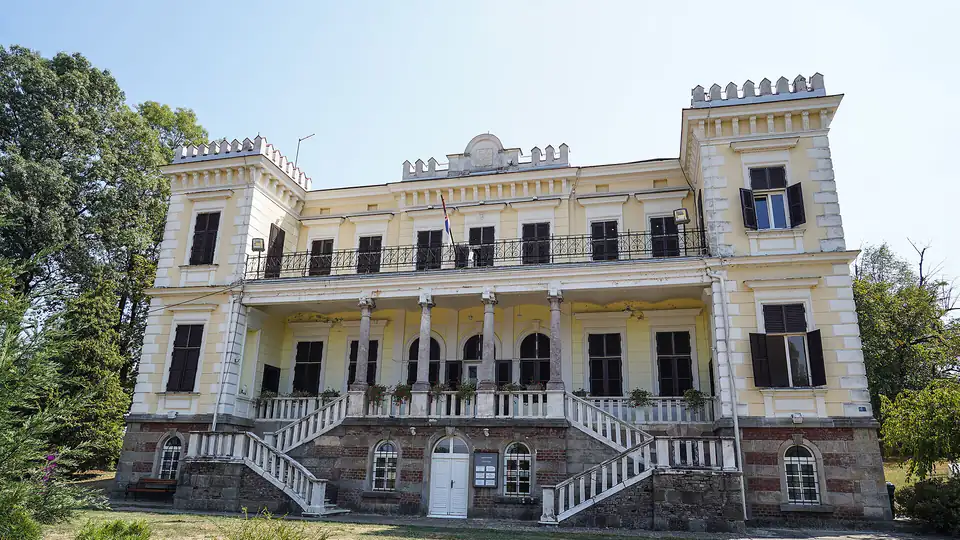
Vrnjačka Banja is one of the few places in Serbia where a single walk takes you through a whole century of building: villas from the late 19th century, General Belimarković's castle, pavilions over the springs and the big hotels from the years when the spa became a mass destination.

The first plans
Systematic planning of the spa began at the end of the 19th century. Around 1890 an engineer from the Ministry of Construction drew up the first plan: roads, regulation of the Vrnjačka river, a planted park and a glasshouse, together with working drawings for several buildings. In 1912 the state put significant money into improving the spa, and about ten years later a building code was adopted that also applied to other Serbian spas. It was an attempt to regulate construction before it got out of hand.
There were several plans and they changed quickly, but only in 1940 was a town plan by the architects Ratomir Bogojević and Nikola Gavrilović adopted. It stayed in use long after the Second World War.
Villas: the face of the old spa
Villas from the late 19th and early 20th centuries give the spa its recognisable look: two-storey houses with wooden balconies, verandas and gardens, built as summer homes for well-off families and as guesthouses. Many are still let as private accommodation, so you can stay in one. Most line the main street, the edges of the park and the riverbank.
The Castle of Culture
The castle built by General Jovan Belimarković is the most striking building of the old spa. Belimarković also paid for the first drinking fountain and water supply. Today the Cultural Centre uses the castle as gallery and museum space, and it hosts exhibitions, screenings and literary evenings throughout the year.
Hotels and the new spa
After the Second World War the spa became a mass destination and gained large hotels — Breza, Merkur, Fontana, Slatina, Slavija and others — plus the Jezero apartment complex. Concrete-and-glass modernism broke the earlier harmony, and in recent years the centre has filled quickly with apartment blocks. That makes the old villas and pavilions all the more valuable: they keep the spirit of the spa as it once was. The oldest layer, the Roman one, survives under the glass pyramid; more on that in our page on the Roman spring.
An architecture walk
- Start at the Topla voda pavilion and the glass pyramid of the Roman spring in the centre.
- Walk along the main street and the promenade, looking at the villas with verandas.
- Turn off to the Castle of Culture.
- Cross the park to the pavilions of the Jezero and Slatina springs.
- Return along the river over the padlocked Bridge of Love.
Two hours of gentle, flat walking are enough for the whole route. For more ideas for a day in the spa, see our overview of things to do in Vrnjačka Banja.
Frequently asked questions
What is the Belimarković castle?
A summer residence built by General Jovan Belimarković, one of the people who did most to develop the spa in the late 19th century. Today it is the Castle of Culture (Zamak kulture), with gallery and museum space that hosts exhibitions, screenings and literary evenings.
Which buildings should I see on a walk around the spa?
The pavilions over the Topla voda, Slatina and Jezero springs, the glass pyramid over the Roman spring, the Castle of Culture, the villas along the main street and the park, and the Bridge of Love over the Vrnjačka river.