
About the spa
The Roman spring and the history of Vrnjačka Banja
Beneath a glass pyramid in the centre of Vrnjačka Banja lies the oldest evidence that people came here to be healed by water: the remains of a Roman spring and pool from between the 2nd and 4th centuries. They were discovered by chance in 1924 and have been part of the story the spa tells about itself ever since.
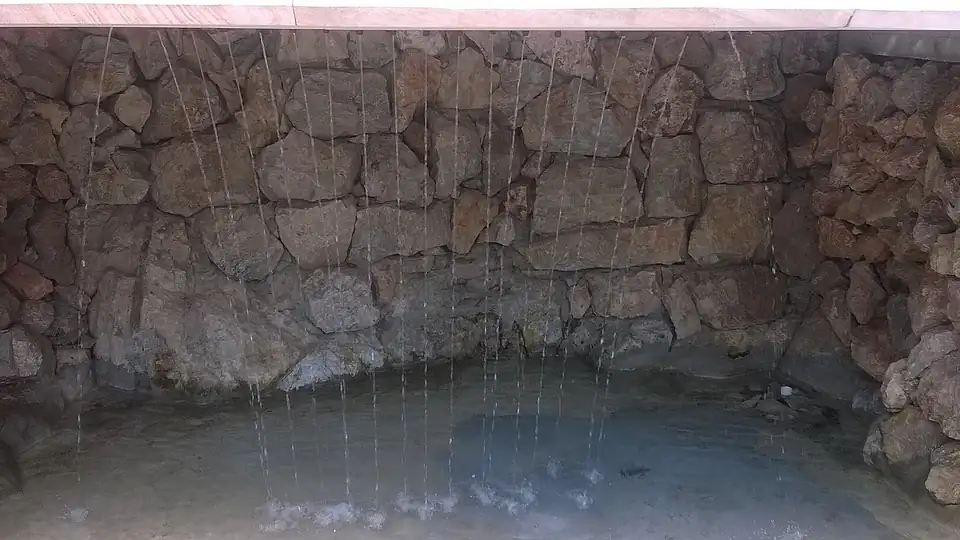

A Roman bath
The Romans built baths on warm springs across their empire, so it is no surprise that they used the water at Vrnjci too. Between the 2nd and 4th centuries there was a bath at the warm spring where, it is believed, soldiers from nearby Roman forts and the local Romanised elite came to recover. What the place was called at the time has not been reliably established.
The 1924 discovery
Traces of the Roman spring were found by chance in 1924, during work on the warm spring. At a depth of about 2.4 metres, workers came across an upright carved rock with warm mineral water flowing from an opening. In and around the rock they found Roman coins from the reigns of Augustus to Valentinian — a span of almost four centuries.
Next came the remains of a bathing pool, filled with water from a spring carved into the rock in the shape of a small well. A key and a ring were found in the pool. The water of this spring was slightly cooler and less mineralised than that of the other springs found the same year. The spring was framed by two colonnades of small marble columns, and steps led down to the water from two sides.
Forgotten, then restored
After the Second World War the spring was covered with concrete slabs and disappeared from visitors' view. It was reopened in 1989, when a glass pyramid designed by the architect Mihajlo Mitrović was placed over it. The remains can still be seen through the glass, and the pyramid has become one of the symbols of the spa centre.
From the Middle Ages to the modern spa
There are no written records of the spa from the time of the medieval Serbian state, even though important centres lay nearby — the monasteries of Žiča and Ljubostinja and Kruševac, Prince Lazar's capital. Several of these places are easy to visit in a day; our overview of day trips from Vrnjačka Banja has suggestions.
The modern history begins in 1835, when Baron Herder, at the wish of Prince Miloš Obrenović, carried out the first chemical analysis of the Topla voda water. In the following decades came the Kursalon (1883) and the first bathhouse (1892), and General Jovan Belimarković built the first drinking fountain and water supply. How a spa town with villas, a park and a promenade grew from this is described in our piece on the architecture of Vrnjačka Banja.
How to visit
The Roman spring is in the centre, beside the footpath, and can be seen through the glass at any time, free of charge. It is best seen at the start of a walk around the springs: from the Roman spring and Topla voda, through the park to the Jezero, Snežnik and Slatina springs. Details of each spring are in our piece on the mineral springs of Vrnjačka Banja.
Frequently asked questions
Where is the Roman spring in Vrnjačka Banja?
Right in the centre, near the Topla voda spring. You will recognise it by the glass pyramid through which you can see the remains of the stone spring and pool.
When was the Roman spring discovered?
In 1924, during work on the warm spring. At a depth of about 2.4 metres, workers found a carved rock with warm mineral water flowing from it, followed by Roman coins and the remains of a pool.
Where does the name Vrnjačka Banja come from?
The spa is named after the village of Vrnjci, on whose land the mineral springs were found; banja simply means spa. What the Romans called the place is not reliably known.