
About the spa
Climate and weather forecast for Vrnjačka Banja
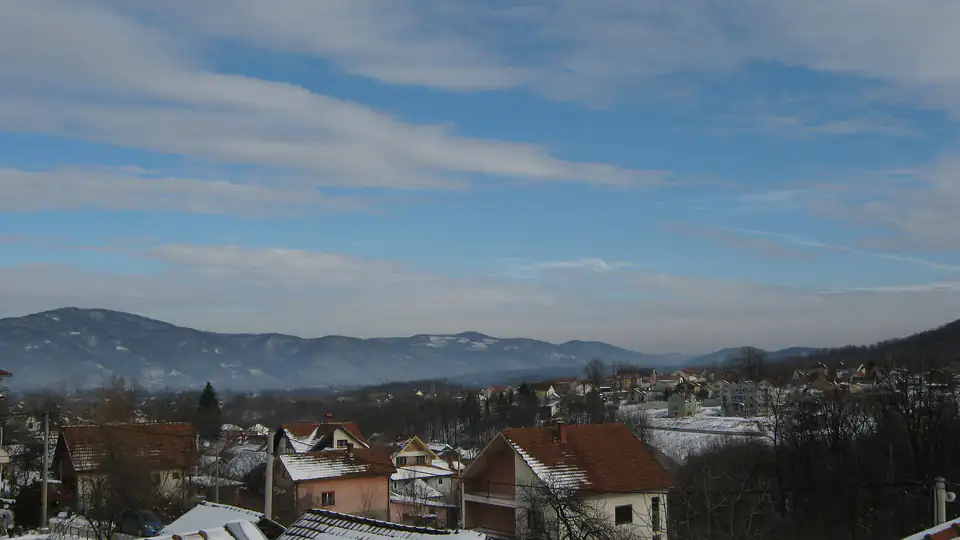
Vrnjačka Banja has a moderate continental climate softened by the mountains: summers are warm but with cool mornings and evenings thanks to the breeze off Goč, and winters bring snow without hard frosts. For the seven-day forecast use the Republic Hydrometeorological Service of Serbia; this page covers what a forecast won't tell you — what to expect at each time of year.

The climate in brief
The spa sits in a valley, sheltered from strong winds by the surrounding mountains. Many days of the year are still, cloud cover is moderate, and the air is clean and fresh thanks to Goč and the forests. The mean annual temperature is around 10 °C and average annual rainfall about 780 mm. The most rain falls in June and October and the least in September, which makes September one of the loveliest months to visit.
Weather by season
| Season | Weather | What to pack |
|---|---|---|
| Spring (March–May) | Changeable: warm days, cold nights, showers | A jacket, an umbrella, comfortable shoes for the park |
| Summer (June–August) | Warm and sunny, frequent afternoon heat; cool mornings | Light clothes, swimwear, a jumper for the evening |
| Autumn (September–November) | Dry and pleasant in September; rain and fog from October | Layers and waterproof shoes |
| Winter (December–February) | Cold, occasional snow; long-lasting snow on Goč | A winter coat, a hat, shoes for snow |
The best time to come
If the weather matters most, the safest bets are late May, the first half of June and September: warm without being too hot, and less crowded than July and August. Summer is best for festivals and outdoor pools, but that is when accommodation is most expensive. In winter the spa is quiet, with a festive programme in the centre and snow on Mount Goč.
Air and microclimate
The spa has always been recommended for its air too. The mountain climate of Goč and the forests around the town give it a pleasant microclimate: on summer evenings a gentle breeze picks up, and morning humidity is usually higher than in the evening. For walks in the park and around the springs, that makes early morning and early evening the nicest parts of a summer day; at midday, head for shade or a pool.
The seven-day forecast
We don't publish our own forecast — the official and more accurate forecast for Vrnjačka Banja and the surrounding area comes from the Republic Hydrometeorological Service of Serbia, together with storm and heatwave warnings. If you have two free days, plan walks and trips around the forecast; our page on a weekend in Vrnjačka Banja has ideas for a short stay.
Frequently asked questions
When is Vrnjačka Banja hottest?
In July and August, when daytime temperatures often go above 30 °C. Thanks to the breeze from Goč, mornings and evenings stay pleasantly cool even then, so pack a light jumper.
Does it snow in Vrnjačka Banja?
It does, but winters in the spa itself are mild, without hard frosts. Snow lasts much longer on Goč, where the ski slope is.
Where can I see an accurate forecast for Vrnjačka Banja?
The Republic Hydrometeorological Service of Serbia publishes the official forecast and weather warnings at hidmet.gov.rs. Treat forecasts more than three to five days ahead as a rough guide.