
About the spa
About Vrnjačka Banja
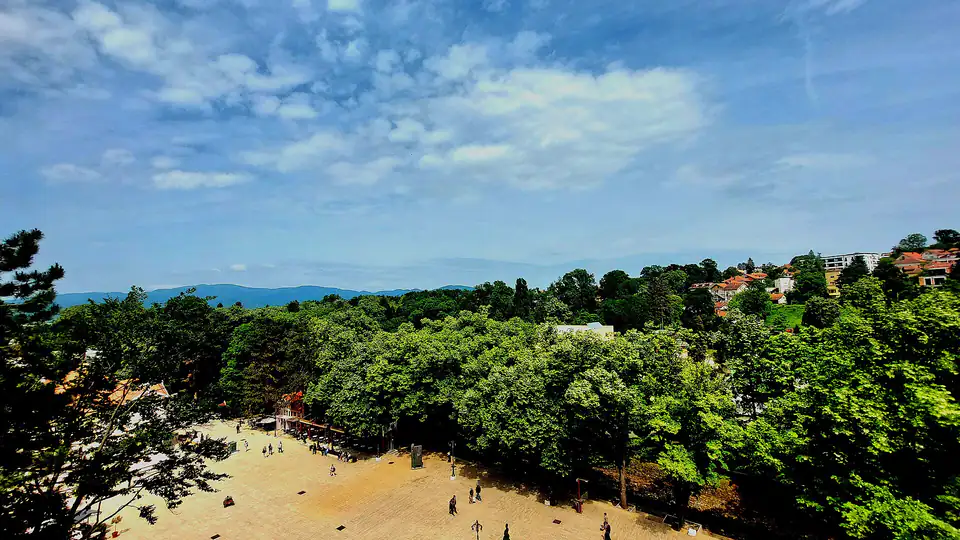
Vrnjačka Banja is the largest and most visited spa town in Serbia, set in the valley of the Vrnjačka river below Mount Goč in central Serbia. A treatment centre with seven mineral springs, a park, a promenade and a summer packed with festivals make it a place people visit for therapy, rest and fun in equal measure.

The spa in numbers
- Location
- Central Serbia, Raška district, the Vrnjačka river valley below Goč
- Altitude
- about 217 m in the centre
- Distance
- about 200 km from Belgrade; Kraljevo and Trstenik are half an hour's drive
- Population
- 9,252 in the town, 25,065 in the municipality (2022 census)
- Mineral springs
- seven; Topla voda is 36.5 °C
- Treatment centre
- Merkur special hospital for treatment and rehabilitation
Getting there
By car from Belgrade, take the motorway south, then go via Kraljevo or along the Morava Corridor towards Kruševac and Trstenik, depending on which section is quickest at the time. By bus, there are regular services from Belgrade, Niš, Kragujevac and Novi Sad; the station is a short walk from the promenade. By train, you can arrive on the Kraljevo–Stalać line, but departures are few, so the bus is more practical. The nearest airport is Morava, near Kraljevo; international visitors usually fly into Belgrade and continue by bus or car.
In the spa itself you mostly won't need a car: the centre, park, springs and most accommodation are within walking distance. For Goč and day trips you will need transport.
What makes the spa special
Mineral springs
The spa has seven known mineral springs, four of which are used in treatment. The best known is Topla voda ("warm water") in the centre, at 36.5 °C — almost body temperature. We cover each spring, its water and its condition today in our piece on the healing waters and mineral springs.
History since Roman times
The Romans had a bath at the warm spring between the 2nd and 4th centuries, and its remains were discovered by chance in 1924. The modern spa begins in 1835, when Baron Herder carried out the first chemical analysis of the water, and its town planning took shape in the late 19th and early 20th centuries. We follow the whole story in our piece on the Roman spring and the history of the spa.
Park, villas and a castle
The central spa park with its promenade is the heart of the town. Around it are villas from the late 19th and early 20th centuries and the castle of General Jovan Belimarković, now the Castle of Culture (Zamak kulture). By the river is the Bridge of Love (Most ljubavi), hung with thousands of padlocks.
When it is at its best
Summer is the liveliest, with festivals, concerts and the carnival. Spring and early autumn bring the park into bloom or colour, with fewer crowds. Winter is quiet but festive, and Goč is close for sledging and skiing. How warm it gets and when it rains most is covered in our piece on the climate and weather in Vrnjačka Banja.
Useful official sources
For current events, spring opening hours and official information, the most reliable sources are the website of the Vrnjačka Banja Tourist Organisation (which has an English section) and the website of the Vrnjačka Banja municipality. The tourist information centre is at Vrnjačka 25.
Frequently asked questions
How far is Vrnjačka Banja from Belgrade?
About 200 kilometres south of Belgrade. The drive usually takes around two and a half to three hours, via the Morava Corridor motorway or through Kraljevo, depending on where in Belgrade you start and on traffic.
How do I get to Vrnjačka Banja without a car?
By bus — there are direct services from Belgrade and other large towns, and the bus station is close to the centre. The spa also has a railway station on the Kraljevo–Stalać line, but trains are infrequent, so check the current timetable.
How many people live in Vrnjačka Banja?
According to the 2022 census, the town itself has 9,252 residents and the whole municipality 25,065. In summer, though, the number of people in the spa multiplies with tourists.